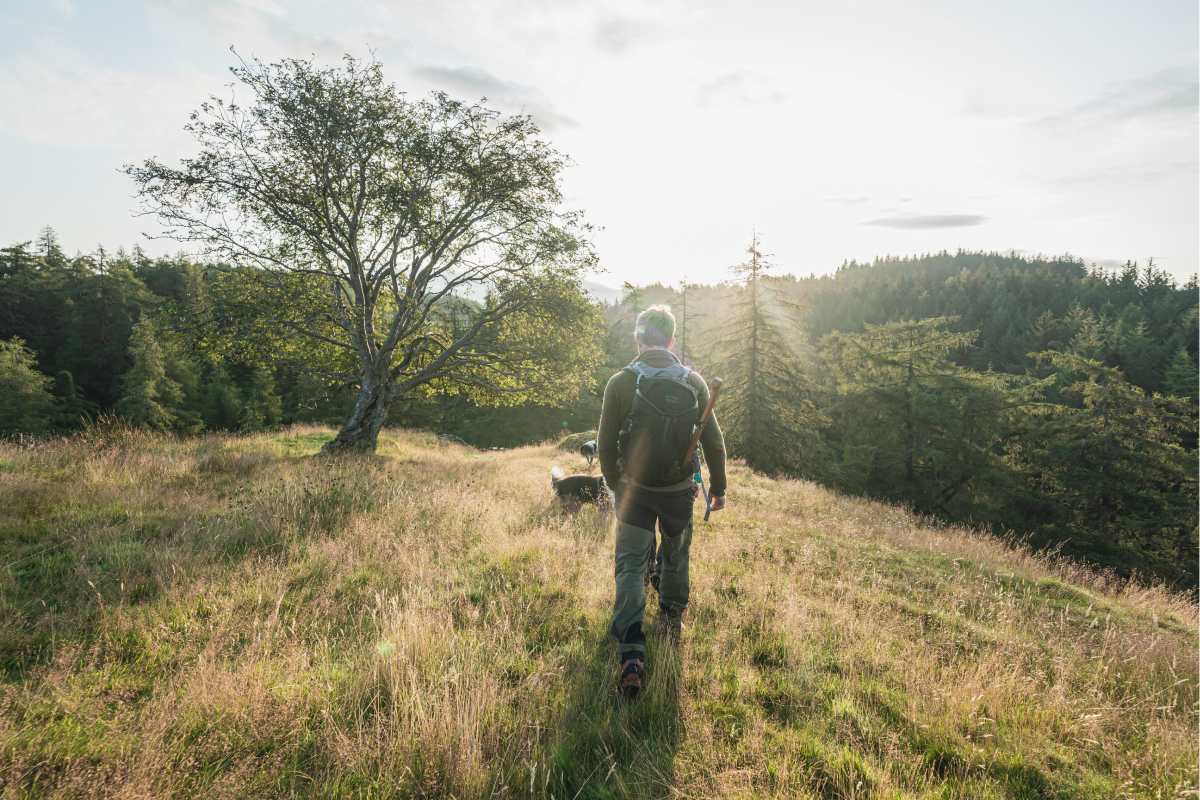
Boulder Is One of America’s Healthiest Cities
But that’s not a health plan
When wellness is the water you swim in, it’s easy to assume you’re already swimming.
Boulder is supposed to be one of the healthiest places in America. Living here, you would think the hard part is already solved. There is a trailhead at the end of half the streets, an organic grocery for every food philosophy, and neighbors who sign up for ultramarathons the way other people sign up for a book club. The mountains are right there. The culture practically hands you a water bottle and a training plan on your way out the door.
So it’s easy to assume the environment is doing the work. If I live here, and I eat well, and I move most days, then my health is basically handled. Right?
Not quite. Being surrounded by wellness is not the same as having a life that supports yours. Some weeks the abundance is the whole problem.
More options, less clarity
There is a particular kind of tired that comes from living in an optimization town.
In a single week here you might absorb five contradictory ideas about what a healthy person does, and every one of them has a devoted local following. Cut the carbs. No, add resistant starch. Fast until noon. Actually, graze all day so your blood sugar stays flat. Cold plunge before dawn. Skip the plunge, it spikes your cortisol. Zone 2 only. Heavy lifting only. Somebody at the coffee shop swears by all of it, and they look great, so now you’re wondering what you’re missing.
This gets sold to us as choice. Look at all these options. But a wall of options is not the same as clarity, and past a certain point it stops feeling like freedom. It feels like a test you didn’t study for. Every protocol you don’t follow becomes a small quiet failure you carry around.
I’ll say what I actually think here, because I’ve watched it happen to smart, capable people for years. A town obsessed with optimizing everything can make you feel like you’re losing at a game that was never a competition to begin with. The information was never your problem. You have plenty of information. What you’re missing is a way to make any of it stick without white-knuckling your way through the day.
If your whole approach to health right now is trying to filter good advice from noise, that filtering problem deserves its own attention. But it isn’t the root of this one.
I did everything Boulder rewards, and still got the diagnosis
Here is the part I know from the inside.
For more than twenty years I lived the Boulder ideal almost to the letter. Mostly plant-based, whole foods, cooked from scratch because I genuinely love cooking. Yoga. Pilates. Hiking. Movement I actually looked forward to. I rarely touched sweets. If you had described my life to a doctor on paper, they would have nodded and moved on to the next patient.
In 2023 I was diagnosed with prediabetes anyway.
I want you to sit with how strange that felt in this specific place. Getting an elevated A1C while living in a town where everyone around you looks metabolically bulletproof, where “what’s your training block” is small talk, where the farmers market is a social event. I had done the things. I had done them for two decades. And my blood didn’t care.
I went looking for the mistake, because there had to be one. I bought a kitchen scale and weighed everything I ate for three months. I ramped up my workouts. I built spreadsheets. At the end of it, I sat down expecting the pattern to jump out at me, some hidden pile of refined carbs I’d been lying to myself about. There wasn’t one. My diet was as balanced as I thought it was.
What that long detour eventually taught me is the thing this whole post is about. Doing the individual healthy things is not the same as having a system that holds them together. The environment I lived in did not protect me. My A1C didn’t know how many trailheads were within walking distance. It responded to my actual days, and my actual days, for all their good ingredients, weren’t built to support the outcome I wanted. (The full version of that story lives here)
To be clear, I’m not saying Boulder’s culture is bad for you. I love it here. I’m saying proximity to wellness isn’t the same as protection. Living next to a gym has never made anyone stronger.
A healthy town can’t do the work for you
This is the distinction I wish someone had drawn for me years earlier.
Boulder gives you options. A personal system gives you defaults. Those are not the same thing, and the gap between them is exactly where most well-intentioned health efforts quietly fall apart.
An option is something you have to choose, every single time, using energy you may or may not have on a Tuesday when work ran long and the fridge is nearly empty. The trail is an option. The class is an option. The beautiful market produce is an option, right up until it wilts in the drawer because nobody decided in advance what it was for. Options are wonderful when you’re rested and motivated. They’re useless at 6 p.m. on a hard day, which is precisely when your health is actually made or lost.
A default is different. A default already decided. It runs whether or not you feel like it, whether or not your willpower showed up, because you built the decision into the structure of your day instead of leaving it to the moment. That’s the real difference between a town full of possibilities and a life that quietly carries you through the ordinary weeks.
I call that structure a Personal Lifestyle Ecosystem. It’s the routines, environments, and small daily patterns that make the healthy choice the easy one, so you’re not relying on discipline you don’t want to spend. No town can build yours for you, not even this one. Boulder hands you every possibility on earth. What it can’t hand you is a life where the good choice is already sitting in front of you, requiring nothing. That part is personal, and it’s the work I actually do.
Designing your own defaults
Philosophy is nice. Let me make it concrete, because the whole point is that this is buildable.
The shift that changed things for me wasn’t a new protocol. I had tried plenty of those. It was moving my effort away from “what should I do today” and toward “what can I decide once so I never have to decide it again.” Small, boring, load-bearing decisions.
One example. For a long time dinner was a daily negotiation, and a rushed negotiation at the end of a long day makes bad calls. So I stopped negotiating in the moment. I built my own meal planner and I make the week’s dinner decisions once, at the beginning of the week, when I’m rested and can actually plan well. By the time a tired Wednesday evening rolls around, there’s nothing to decide. The choice was already made by a calmer version of me who had the capacity to make it. That one default removed maybe three hundred small choices a year and every ounce of the low-grade guilt that used to ride along with them.
Another. Every morning, when I sit down with my coffee, I do a short meditation or a few minutes of breathwork before I plan my day. It’s not a thing I have to find time for, because it’s already tied to something that happens without fail. The coffee was always going to happen. The point wasn’t more willpower. It was less need for it.
There’s a principle underneath both of these that’s worth more than any single tactic. The change actually worth making is the one that makes tomorrow’s healthy choice easier instead of harder. Not the most impressive change. Not the one with the best story at the dinner party. The one that lowers the effort required from the future version of you, who will be tired and busy and deserves a life that doesn’t fight her. If you want the mechanics of building routines that hold up under stress, I’ve written about that too.
If you live here and it still isn’t clicking
If you’ve done the Boulder things and something still feels off, I want to say this plainly. The problem isn’t you, and it isn’t one more protocol you haven’t discovered yet. It’s that no one ever helped you build the system underneath the effort. You’ve been running your health on options and willpower in a town that has convinced you that should be enough. It was never going to be enough, for anyone.
The people I work with are usually health-aware, Boulder-area folks who have genuinely tried everything and are tired of the noise. They don’t need another expert telling them what to eat. They need a life that makes the eating easy.
If you’ve done everything this town rewards and your health still isn’t clicking, let’s look at the system underneath it. That’s the work I do with people across Boulder County. Book a free discovery call and we’ll find your leverage point, the one change that makes the rest of it lighter.