Designing for the Path of Least Resistance
How to Make Healthy Choices Your Default
The Effort Equation
Here’s something I’ve come to believe after years of working on my own health and supporting others with theirs: the sustainability of any health behavior is inversely proportional to the effort it requires on a daily basis.
That’s a fancy way of saying: if it’s hard to do every single time, you’ll eventually stop doing it.
This isn’t a willpower problem. It’s physics. Human beings are wired to conserve energy. Our brains are constantly running a background calculation — effort in versus reward out — and when the effort is high and the reward is delayed or invisible, the brain defaults to whatever’s easier. Not because you’re lazy. Because that’s how brains work.
This means that the most effective health strategy isn’t the one with the best science behind it. It’s the one you can actually execute inside the constraints of your real life, on your worst day, with your lowest energy. The strategy that survives Tuesday at 6 PM is worth more than the one that shines on Saturday morning.
And that realization shifts the entire design problem. Instead of asking “what’s the optimal health behavior?” we should be asking “how do I make the healthy behavior the easiest option available?”
What Path of Least Resistance Actually Means
In physics, water flows downhill. It doesn’t decide to. It doesn’t motivate itself. It follows the path of least resistance — the route that requires the least energy. And it does this with perfect reliability, every single time.
Your daily behaviors follow a similar logic. When you’re rested, resourceful, and intentional, you can override the default and choose the harder path. But the rest of the time — and the rest of the time is most of the time — you flow toward whatever’s easiest.
This isn’t a flaw. It’s a design feature. The question is whether the easiest path in your life happens to be the healthy one, or not.
For most people, it’s not. The easiest dinner is the one that requires zero planning. The easiest evening activity is the one that involves a screen and a couch. The easiest response to stress is the one that’s been practiced a thousand times, whether it serves you or not.
Designing for the path of least resistance means deliberately restructuring your environment, routines, and decision points so that the healthy choice becomes the default. Not through restriction or removal, but through arrangement — making the right thing easier and the less helpful thing slightly less convenient.
Three Layers of Design
I find it helpful to think about this in three layers: environment, routine, and decision architecture. Each one operates differently, and each one offers a different kind of leverage.
Layer one: your physical environment
Your close environment is the most powerful and most underused lever in health behavior. It works on you constantly, whether you’re paying attention or not. It shapes what you see, what you reach for, what you default to, and what you forget about entirely.
The research on this is remarkably consistent. People eat more from larger plates. They snack more when food is visible. They move less when their spaces are designed for sitting. They sleep worse when screens are in the bedroom. None of these are conscious decisions. They’re environmental effects.
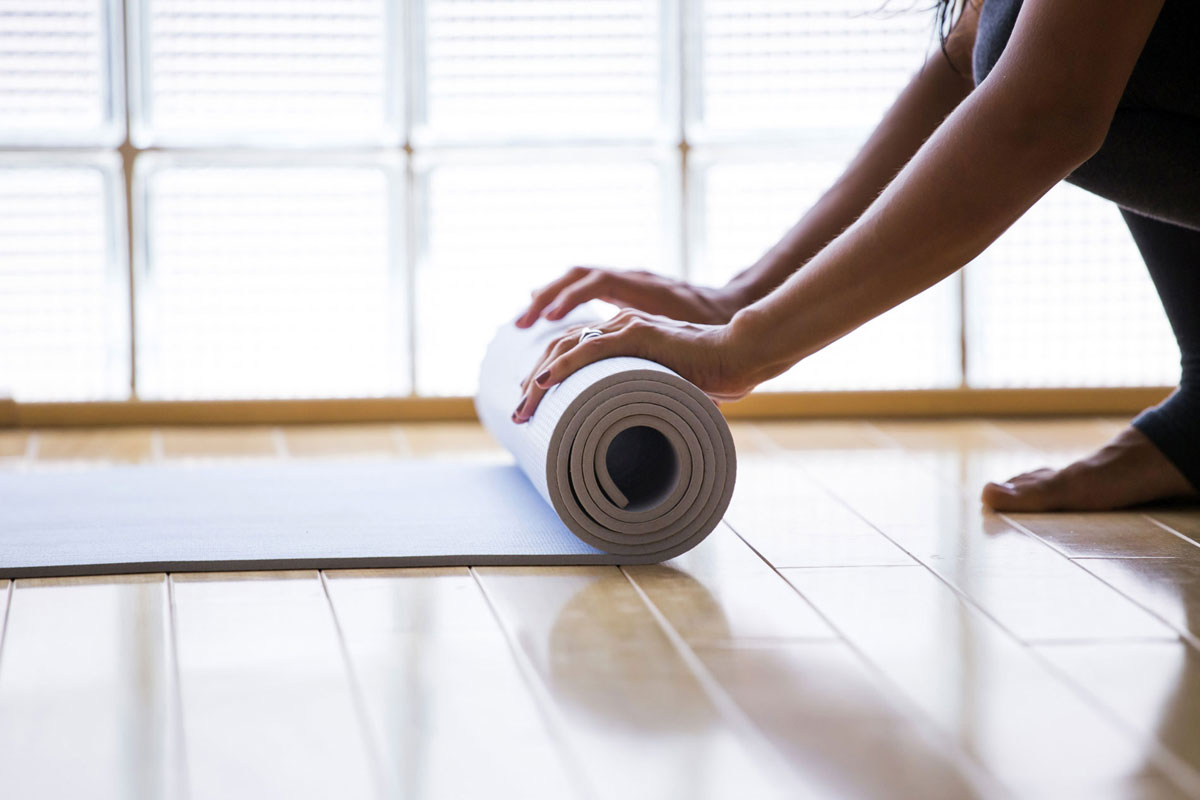
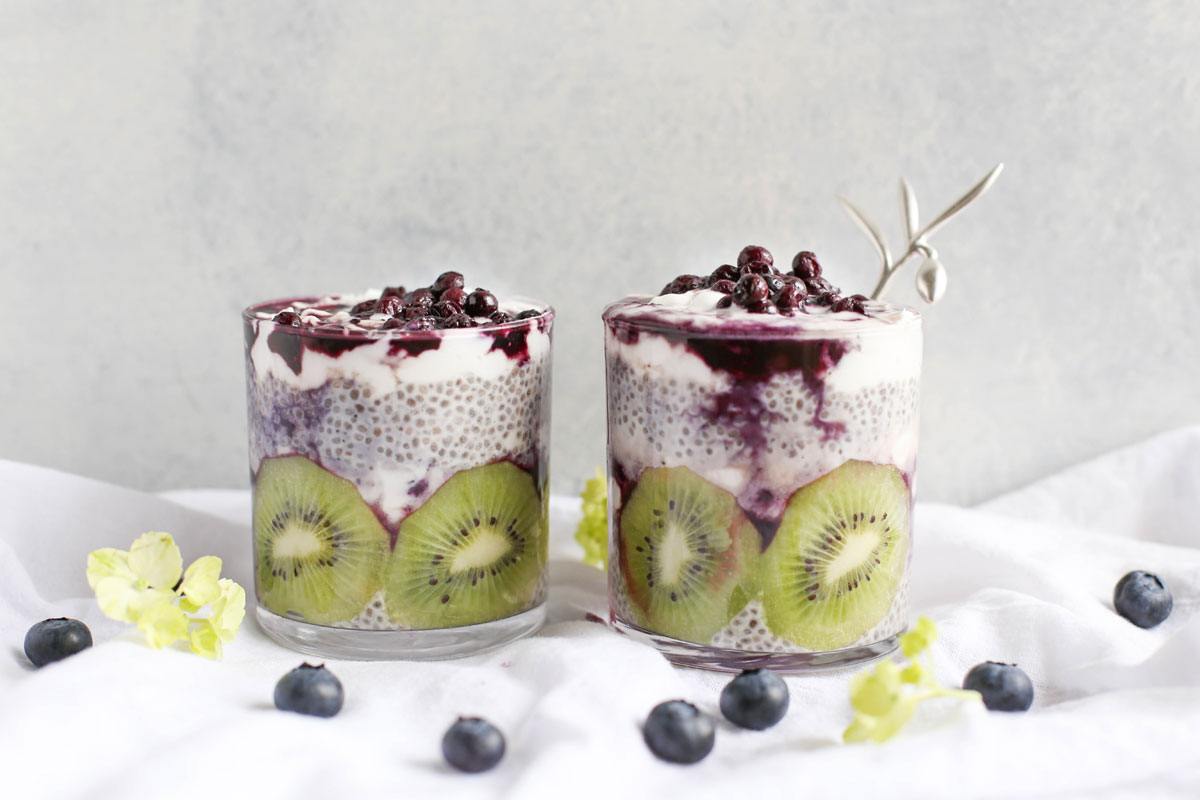
The practical applications are disarmingly simple. Put the fruit on the counter and the chips in the back of the pantry. Set up a corner of your living room with a yoga mat — not tucked away, but visible. Healthy food at eye level in the fridge. Keep water on your desk.
Each of these changes is tiny. Each one shifts the effort equation just enough that the healthier choice moves from requiring a decision to being the default. You haven’t added willpower. You’ve removed friction.
Layer two: your routines
If environment is the landscape, routines are the trails you walk through it. A well-worn trail is easy to follow. You don’t have to think about where you’re going. You just walk.
The power of routines isn’t discipline, it’s automation. A behavior that’s embedded in a routine costs almost nothing cognitively. Brushing your teeth before bed doesn’t require a decision. Making coffee or tea in the morning doesn’t require motivation. These behaviors persist because they’re built into the structure of your day, not because you choose them fresh each time.
The opportunity is to build health behaviors into that same structure. Not as additions — more things on the list — but as integrations. Things that happen because of when and where they sit in your day, not because you remembered to do them.
A ten-minute walk after lunch, linked to the end of your meal, becomes something that just happens. A glass of water first thing in the morning, connected to the act of entering the kitchen, becomes automatic. A five-minute stretch after your evening shower becomes part of the transition from day to night.
The key is anchoring. Attach the new behavior to something you already do, in a place you already are, at a time when it flows naturally. Don’t create a new slot in your schedule. Embed it in an existing one.
Layer three: your decision architecture
This is the most invisible layer and often the most powerful. Decision architecture is about how many decisions your day requires and how many of those decisions you can eliminate, simplify, or make in advance.
Every decision costs energy. What to eat for breakfast. Whether to exercise. What to wear. How to respond to that email. Whether to stay up or go to bed. Most of these decisions feel small individually. Collectively, they’re enormous. And each one depletes the same cognitive budget you need for the decisions that actually matter.
The most effective thing you can do for your health might not be a health intervention at all. It might be reducing the total number of decisions your day requires.
Meal templates — not rigid plans, but flexible structures — eliminate the daily “what should I eat?” question. A default workout schedule removes the “should I exercise today?” debate. A pre-set bedtime alarm eliminates the nightly negotiation with yourself about when to stop scrolling.
The principle is simple: decide once, execute many times. Move the decision from the moment of action — when your bandwidth is lowest — to a moment of planning, when your bandwidth is highest. Then let the structure carry you.
What This Looks Like in Practice
I want to be concrete, because the gap between understanding this concept and living it is where most people get stuck.
A client I worked with was struggling with evening nutrition. She knew what she should eat. She had the ingredients. But after a full day of work and parenting, the decision of what to cook was the straw that broke the camel’s back every single night. She’d default to cereal or toast — not because she wanted it, but because it was the only thing that required zero thought.
We didn’t overhaul her diet. We designed three weeknight defaults: meals she liked, that her family would eat, that required minimal preparation, and that supported her glucose. We wrote them on a card and stuck it on the fridge. Monday, Wednesday, Friday were covered. Tuesday and Thursday she could improvise if she had the energy, or fall back on variations of the three defaults if she didn’t.
Within two weeks, her evening eating had shifted. Not through effort, but through the absence of a decision she no longer had to make.
That’s the path of least resistance in action. Not a perfect diet or a meal plan, but a structure that met her where she actually was, on her hardest days, and made the healthier choice the easier one.
The Deeper Principle
Everything I’ve described here rests on one foundational idea: you don’t create lasting health change by asking more of yourself. You create it by asking less and by designing a life where the right things happen with less friction, less cognitive load, and less daily negotiation.
This is design-based health. It’s the opposite of effort-based health. And in my experience, it’s the only kind that survives real life.
Your job isn’t to be more disciplined. Your job is to be a better designer of the conditions you live in. When the path of least resistance and the path of health are the same path, healthy choices stop being a struggle and become a byproduct.
And that’s when things actually change.